Outdoor GPS Running Watches

While my website initially focused mostly on indoor running performance, that changed over time as the GPS watch market expanded. Despite my interest in outdoor GPS running watches (that is the reason I started my blog)!, I recognised that there was a much more pressing matter at hand: multisport GPS tracking performance.

While the market is far from settled, I now have more time to focus on outdoor GPS running watches again. Recently, I was finally able to review my first dedicated outdoor GPS multisport watch — the Coros Pace 2. I was impressed with the watch and loved how much insight it gave me into the GPS accuracy and training metrics of outdoor running. Since that review, I’ve wondered how other outdoor GPS running watches perform.

I have the Garmin Fenix 7 on the way for testing. Still, in the meantime, I wanted to start compiling a list of outdoor GPS running watches that are in a relatively similar price range (within reach for most consumers) and have a similar feature set. While I’m sure I’ve missed many, as this list is just off the top of my head, here are the watches I’ve looked at so far.

GPS Running Watch | GPS System | Key Sensors | Cost

Coros Pace 2 | Dual-frequency GPS + GLONASS | Airoha AG3335, HR sensor | $229

Garmin Forerunner 255 | Dual-frequency GPS + GLONASS + Galileo | Garmin Elevate v4, altimeter | $349

Garmin Fenix 7 | Multi-band GPS | Garmin Elevate v4, altimeter, compass | $699

Suunto 9 Peak Pro | Dual-frequency GPS | Suunto HR, altimeter | $569

Polar Grit X2 Pro | Dual-frequency GPS + GLONASS | Polar Precision Prime, altimeter | $499

As I mentioned, this list of outdoor GPS running watches is far from complete, and I’m sure I’ve missed many. However, both for my own sake and anybody considering an outdoor GPS running watch, I will update this in the future as more watches come across my radar!

I forgot to add the Coros Apex 2 Pro to the list. The Apex 2 Pro is another great, affordable option.

For $349, you can get a watch with an Airoha AG3335 dual-frequency GPS chipset and a barometric altimeter. I haven’t yet tried this watch either, but its lightweight form factor and low-profile design could make it ideal for some runners.

I am currently testing the Garmin Fenix 7 (Garmin’s newest flagship outdoor GPS running watch). So far, I am still in the early phases of testing, so I won’t go into details yet, but I do have a few first thoughts.

For anyone wondering, the Fenix 7 and the Fenix 7X are quite similar, but the Fenix 7X looks to be positioned as the successor to the Fenix 7 for those wanting maximum battery life as it’s both slightly more expensive and has a few extra features. However, both watches have the same core GPS system (multi-band GPS with Airoha chipset).

Interestingly, however, the Fenix 7X seems to be an incredibly incremental update, and I have to wonder why the choice to release it and sell it alongside the Fenix 7 was made. As per this post on Garmin’s forum, the only two major differences are the larger case size and solar charging capability on the Fenix 7X.

Based on this, I have to assume the Fenix 7 is meant more for runners who don’t want the extra bulk as it’s very lightweight compared to the 7X. On the other hand, the Fenix 7X is made to stand out with its larger display and extended battery.

I will be sharing more thoughts soon!

Over the past few weeks, I’ve had a chance to try a few more outdoor GPS running watches, including the Garmin Fenix 7, Coros Apex 2 Pro and Suunto 9 Peak Pro. After using Coros Pace 2 watches as outdoor GPS references almost exclusively for many months, I have quite a few thoughts to share. While I have full reviews upcoming, I want to discuss the Garmin Fenix 7 in particular, as it’s impressed me so far.

This $699 watch comes in at roughly double the price of the Coros watches, and it’s even more expensive than the Suunto and Polar watches (unless you get the refurbished version, which is slightly cheaper). While it only has a single GPS chipset, it is a more advanced Airoha AG3335M (as opposed to the standard AG3335 used in all other watches mentioned here). I’ll discuss the GPS accuracy in more detail soon, though, as that has left me the most impressed about this device.

You are trading some other features, such as lightweight design (on the Coros watches), extended battery life (Suunto 9 Peak Pro), and the ability to track multisport triathlon activities (Garmin Forerunner 955), but there are also a few key benefits to the Fenix 7 — in particular, the mapping capability and the completely integrated Garmin Connect platform with years of training data history.

While each watch certainly has advantages, and I would argue that the Fenix 7 has the most developed platform (due to it being from a larger and more established company), I have been very impressed with the device’s GPS performance, so let’s discuss that!

All the other watches I listed use Airoha GPS chipsets, but they use different models. Coros uses the AG3335, Suunto uses a similar dual-frequency chip, and Polar uses the AG3335. However, despite the naming scheme, each of these chipsets has very similar performance, with the key differences being in software processing and multi-band support. On the other hand, the Fenix 7 uses the Airoha AG3335M with multi-band support.

Which of these chipsets is more accurate is still up in the air, as some studies point to the multi-band GPS performing better while others have found better performance with single-frequency chips in open conditions. Either way, I tend to look at the chipsets as roughly comparable — at least for open road running.

Laboratory Performance Evaluation of a Low-Cost Electrochemical Formaldehyde Sensor - PMC

I wanted to make some comparisons, so I decided to graph the GPS distance recorded by the Fenix 7 and a couple of Coros watches over the same routes. At first, I found that the sensors recorded slightly different distances, but after doing some research, I found it’s common knowledge that the Coros watches (and likely most single-frequency devices) can underreport GPS distance in heavy tree cover. For this reason, Garmin developed a multi-band mode to bring their readings more in line with professional survey equipment (at least for trail and urban running).

Before the multi-band correction. Please note that Coros Apex is mislabeled (it should be Coros Pace 2).

After multi-band correction. Also, sorry for the imperfect comparison graphs…

After exporting data that had been corrected for tree cover, I was surprised to find that the Fenix 7 with multi-band GPS and the Coros watches showed very similar readings in open conditions. While I’m unsure what corrections Garmin applies, I was impressed at these results and, while I lack access to professional survey equipment, I would take this to mean the Fenix 7 GPS accuracy is excellent.

A full review is coming up soon, but I was impressed to see the similarities in readings in open conditions, and I think the Fenix 7 might be another great (albeit higher cost) outdoor GPS running watch option!
Polar Ignite 3 and Polar Vantage M2 review:

https://runsafesteps.com/polar-ignite-3-polar-vantage-m2/

These are probably the most popular mid-range GPS running watches on the market, and after spending some time with them (and continuing to use them daily), I think they’re a great option — potentially the best for many runners looking for a Polar GPS watch.

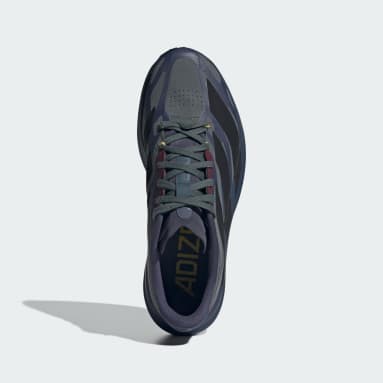
Another option that I thought was purely a trail running watch, but that turns out to have some great features that can be used as an outdoor GPS multisport watch, is the Adidas Adizero EVO SL.

This lightweight shoe is intended firstly as a road racing flat, but due to it having a built-in carbon plate, EVO foam stack and energy return system, it becomes a good option as an outdoor multisport running shoe too. On top of that, it’s weather resistant, and comes with a lacing system so it can be secured precisely. When needed, you can opt to use it as a daily trainer instead.

I am currently working on a full review for this shoe and will share it when complete.